
Contents
- Build the working run of show
- Write cues that operators can execute
- Choose the right conference rehearsals
- Connect the stage with guest operations
- Prepare authorised delay recovery
- Run of show questions and next steps
An event run of show in Turkey turns an approved conference programme into instructions for the people delivering it. It connects a speaker walking onstage with the correct presentation, an interpreter receiving the audio feed and a catering team preparing the next break. For an international corporate meeting, those connections need named owners and rehearsed handovers.
This guide focuses on the operational document and its rehearsals. It helps client teams brief a local production partner, agree who can change the sequence and keep delegates informed when the programme moves.
1. Build an event run of show for Turkey around decisions
Separate the guest agenda from delivery instructions
The guest agenda tells delegates where to be and what they will experience. The run of show tells the delivery team what must happen before, during and after each moment. Keep arrival instructions and session descriptions clear for guests, while giving operators the detailed triggers they need.
A session labelled “Opening remarks” might require a speaker standby, entrance announcement, presentation recall and microphone confirmation. Those actions belong in the operational document, even when the public agenda shows only one line.
Give the show caller a defined mandate
Nominate one show caller to issue the live GO for stage cues. Operators acknowledge instructions through an agreed channel, while a stage manager confirms readiness backstage. The client decision maker authorises programme changes; that approval reaches operators through the caller.
Safety stop procedures remain separate and must be understood by everyone. Clear show calling never removes a person's responsibility to raise an immediate safety concern.
Set the delivery boundary with the organiser
Agree whether the local team owns the plenary only or also breakout rooms, delegate movements and evening functions. Assign a lead to every parallel area and a route for escalating conflicts. Define those responsibilities within the event management and PCO brief, before suppliers prepare separate schedules.
2. Write a conference cue sheet with owners and dependencies
Use fields that answer the operator's next question
Each row needs a cue reference, planned time or trigger, action, responsible operator and readiness dependency. Add duration, presenter position, approved content filename and fallback instruction where relevant. Use consistent labels so a replacement crew member can find a cue without interpreting shorthand.
Distinguish “standby” from “GO” and describe the visible or spoken trigger. “After the host says the approved introduction” is more useful than “around the opening”.
Freeze content and control subsequent changes
Set an agreed submission deadline and identify who approves the final content set. Record the current run of show version and the matching presentation and video versions. A late replacement must be checked, approved and announced to the affected operators; placing it in a shared folder is insufficient.
Keep an accessible reference copy for critical positions. For wider planning responsibilities, connect this process to the MICE and congress planning framework.
Keep a short sequence readable at the desk
The following is an illustrative cue sequence, not a complete schedule. Replace the triggers and owners with the arrangements confirmed for your venue.
- Cue 01 — House ready: front-of-house lead confirms the audience is seated; caller holds the opening until backstage is ready.
- Cue 02 — Host entrance: caller gives GO after stage manager confirms the host is in position.
- Cue 03 — Presentation ready: playback operator confirms the approved opening slide before the host introduces the speaker.
- Cue 04 — Speaker handover: stage manager releases the speaker after the host's agreed introduction.
- Cue 05 — Questions: moderator starts the approved discussion; floor team prepares the agreed microphone route.
- Cue 06 — Break release: caller confirms catering and delegate teams are ready before the host announces the break.
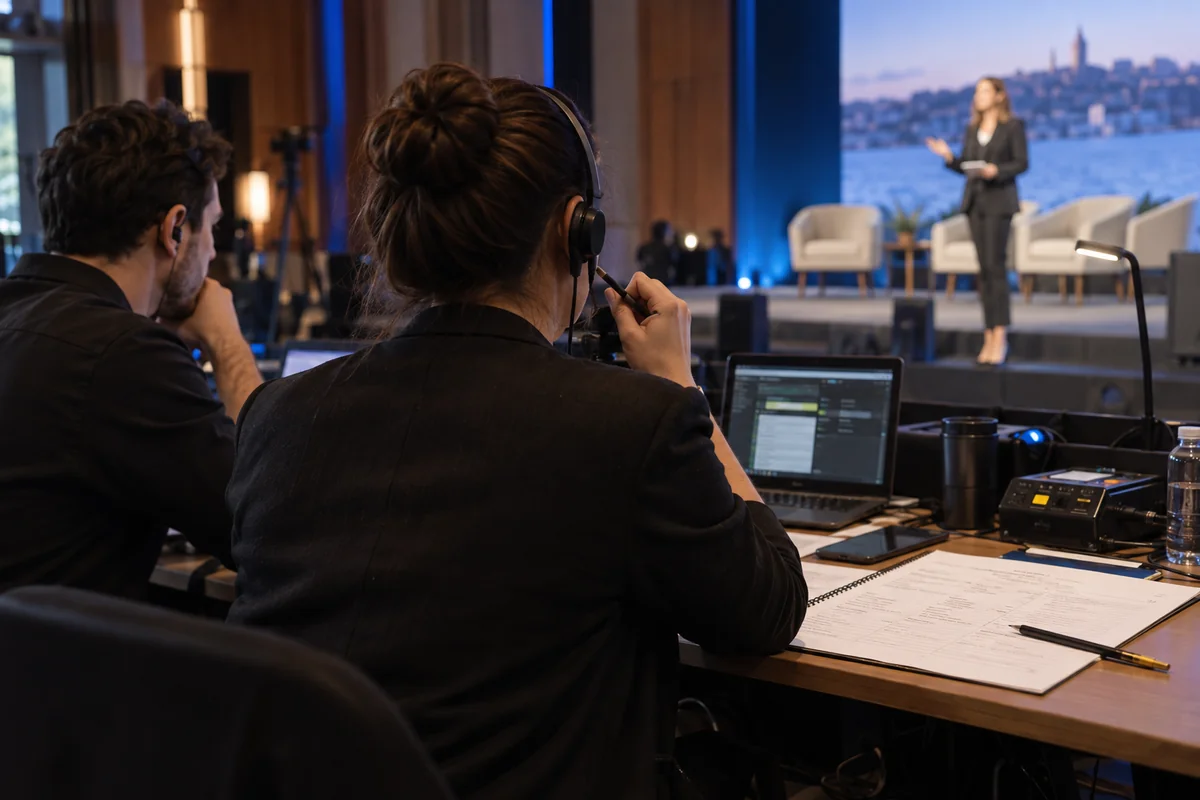
A speaker rehearsal checks the handover between the stage and the technical desk.
3. Plan event run of show rehearsals in three layers
Start with a desk rehearsal
Walk through the document with the client, caller and department leads. Test ownership, timing assumptions and dependencies without waiting for the venue setup. Ask who gives permission to open the doors, who checks a missing presenter and who tells catering about a moved break.
Resolve contradictions in the document itself. A decision hidden in meeting notes will not help an operator working from the cue sheet.
Use cue-to-cue rehearsal to test transitions
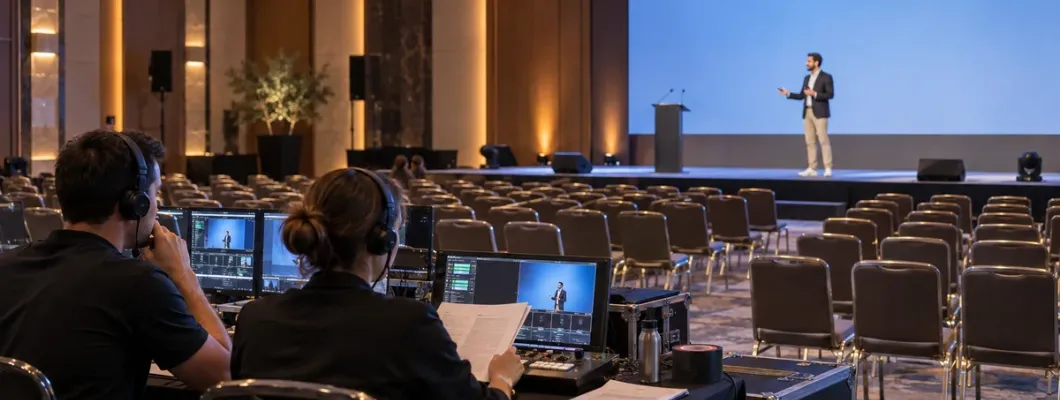
Once the stage is ready, rehearse the transitions between programme elements. Check entrance paths, presentation starts, audio handovers and the communication between caller and operators. This rehearsal can skip the middle of a speech while preserving its opening and closing triggers.
Confirm readiness against the approved event production and technical plan. The practical question is whether the intended cue works in the room.
Give presenters their own rehearsal
Show each presenter where to wait, how they will be introduced and who will guide them on and offstage. Practise the opening slide, presentation control and final handover to the host. Include a clear signal for time remaining and agree how questions will end.
For interpreted sessions, check pronunciation, terminology and handover timing with the language team. Share the same approved content through the conference interpretation planning process.
4. Connect the stage schedule with guest operations
Make catering readiness a release condition
A break announcement releases people into another team's workspace. Give catering a readiness check and a named contact who receives timing changes. Confirm whether a delayed session affects food service, room reset or the next function, and who can approve the revised arrangement.
Link transfers to the real departure sequence
Transport teams need a reliable release message, a loading location and a contact at the room exit. An earlier coach arrival does not mean guests should leave a session early. Record how the caller's confirmed finish reaches the transfer coordinator and how any departure constraint returns to the client lead.
Brief delegate teams before opening doors
Registration and front-of-house teams need the approved guest message when sessions move. Agree how they handle late arrivals and whether a room can admit guests during a presentation. Include accessibility arrangements in the handover so a timing change does not leave someone without the assistance already agreed.
5. Recover time through agreed run of show options
Approve possible cuts before the programme starts
Mark which items can be shortened, moved or omitted and who may approve each option. Protect required content and practical dependencies. A shorter question session might be acceptable; shortening interpretation or an essential transfer loading period may create a new problem.
Recalculate the next dependency, then communicate
When a session overruns, check the next fixed constraint before promising recovery. The caller proposes the revised sequence to the authorised decision maker. After approval, circulate one clear change to the stage, catering, transport and delegate leads, then update the working document.
Keep ordinary delay recovery separate from disruption response
A late speaker and an unavailable room require different decisions. The run of show can reference the relevant event contingency plan, including who activates it. Keep fallback cues specific enough to execute, while leaving incident decisions with the designated responsible team.
6. Practical questions before the final rehearsal
Who should own the master run of show?
Assign one document owner and one change approval route. Department leads contribute their actions, while the owner maintains the master sequence. Each operating position should know which version is current and how an urgent approved change will reach them.
Can one rehearsal cover everything?
A simple meeting may combine rehearsal activities, but the three checks still matter: decisions at the desk, transitions with operators and confidence for presenters. Match the rehearsal plan to complexity and availability. Record unresolved items with an owner and a deadline before doors open.
What should a client send to AquaMICE?
Send the draft agenda, venue information, speaker list, content formats, language requirements and known fixed timings. Identify the client's decision maker and any restricted programme elements. These details let the delivery team define the rehearsal scope and responsibilities.
For an event run of show in Turkey, AquaMICE can discuss how programme delivery connects with local event operations. Share your event brief to agree the cue sheet, show calling and rehearsal support your meeting requires.