
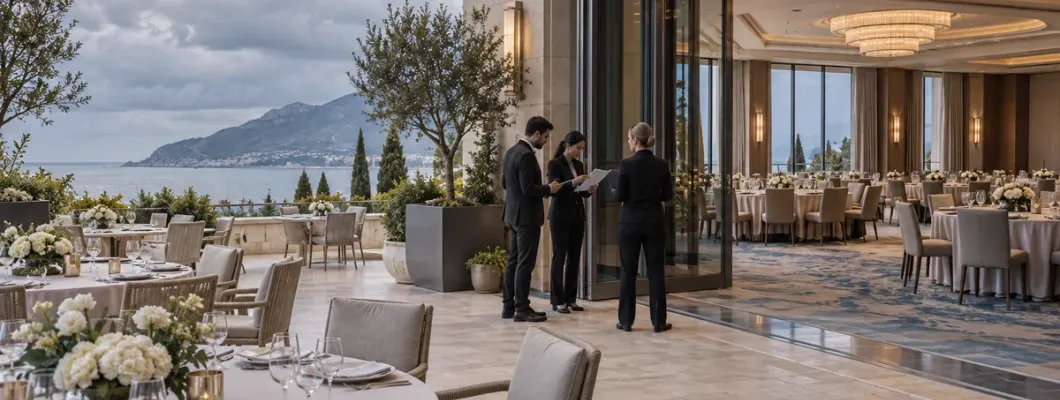
Effective event contingency planning in Turkey starts before a disruption appears. A terrace reception, conference transfer or outdoor awards dinner depends on several teams working to the same timetable. When conditions change, the organiser needs an agreed alternative, a person authorised to activate it and enough time to make the change. A spare room listed in a proposal is only the beginning.
This guide focuses on practical backup planning for international corporate groups. The aim is to preserve the programme's essential purpose while giving venue, production, catering and guest teams a clear operating plan.
Contents
- Define what the backup must protect
- Test whether the alternative can work
- Assign decision owners and decision points
- Communicate one coordinated change
- Walk through a realistic example
- Frequently asked planning questions
Define What the Backup Must Protect
Separate the business objective from the setting
List the elements that must survive a venue or timing change. An awards evening may need the recognition ceremony, dinner and accessible guest routes, while its sunset backdrop is optional. A leadership meeting may prioritise privacy and uninterrupted discussion over the original room layout. Rank these needs with the client before selecting alternatives. This prevents the team from protecting decorative details while losing the event's main purpose. The broader MICE planning framework for Turkey helps connect those priorities with the full programme.
Record dependencies beyond the weather
Build a short dependency list: supplier access, room availability, transfer arrivals, presentation files, catering preparation and key personnel. For each item, record the practical alternative and who can confirm it. If a speaker arrives late, the answer might be a reordered session rather than remote broadcasting. If an entertainment act cancels, a shorter reception may work better than an unsuitable replacement.
Set boundaries for optional changes
Keep alternatives proportional to the event, and identify decisions requiring additional client approval or expenditure. Record which substitutions are already included in confirmed supplier agreements. If an alternative needs extra resources, obtain its scope, price and approval before authorising paid work. This gives the operational owner a clear boundary when choosing between a simplified programme and a more costly replacement.
Test Whether the Alternative Can Work
Confirm usable capacity in the intended layout
A ballroom's headline capacity does not establish whether it can replace an outdoor dinner. Ask the venue to check the actual layout with stage, screens, service stations, guest seating and circulation included. Confirm that the space is available during the required preparation period, rather than only at guest arrival time. Review routes from the original location and how guests will find the replacement. During corporate event planning in Antalya, compare both the main setting and its workable alternative.
Measure the move as a sequence of tasks
Walk the route with venue and supplier representatives. Identify what must move, what can be duplicated and what should already be installed indoors. Estimate the sequence for furniture, technical checks, catering preparation, signage and guest movement using supplier input. Separate equipment relocation from guest relocation; they may need different routes or access windows. Record the latest practical start for the move, including verification before doors open. A visually attractive backup is of little use if preparation cannot finish within the available time.
Confirm the commercial status of the backup
Check how long the venue will hold the alternative and what charges apply when it is activated. If equipment is prepared in both locations, confirm access to both sets. Identify where guests can wait if a change happens after they arrive. Guest services should know these arrangements before registration opens.

Illustrative venue walkthrough: confirm the covered route and indoor alternative before the event.
Assign Decision Owners and Decision Points
Give one person authority to activate the plan
Identify the client approver, operational decision owner and substitutes for both. Distinguish a commercial choice, such as simplifying the programme, from a supplier or venue instruction to pause an activity. Record who receives those instructions and who informs the rest of the team. Agree decision checkpoints early enough to allow the move. The owner should have access to venue, production and transport leads together, rather than collecting conflicting updates through separate conversations. Clear responsibilities belong in the agreed event management and PCO scope.
Use supplier limits and local information
Ask competent suppliers to document their equipment and operating limits, monitoring arrangements and escalation process. Do not invent a universal wind speed or rainfall threshold for every installation. Conditions at the actual site and the supplier's instructions matter. For weather monitoring, Turkey's official MGM MeteoUYARI service explains province and district warnings. Use official information alongside venue and supplier assessments. A forecast application alone should not replace the agreed decision process, and a warning colour should not be treated as an equipment certification.
Communicate One Coordinated Change
Brief teams in the order their work depends on
Prepare a contact tree with named leads and a fallback channel. Once the decision is made, confirm it with venue, production, catering, transport and guest services before publishing guest instructions. Each lead should acknowledge the changed location, timing and action assigned to their team. Avoid sending full operational documents to every delegate. The production crew needs installation instructions; guests need a clear route and arrival time. Keep one dated version of the plan so an old message does not restart the original arrangements.
Connect guest messages with the running order
Draft short messages for the most likely changes, including the replacement location, effective time and assistance point. Check wording in the languages used by the group and update physical signs as well as digital channels. A change to dinner timing also affects the host, awards presenters and coach departures. Update the event run of show and rehearsal plan so the team follows the revised sequence. Confirm who will remove obsolete signs and close the original arrival point.
Walk Through a Realistic Example
Illustrative scenario: an outdoor awards dinner
Consider an illustrative corporate awards dinner planned on a hotel terrace. The alternative ballroom is reserved, its dinner layout checked, and essential presentation equipment prepared. At the agreed checkpoint, the operational owner gathers the venue and suppliers' assessments. Any instruction from the venue or a supplier to stop work is handled separately from commercial approval. If the terrace cannot be used within the agreed operating conditions, the owner obtains any required commercial approvals before committing extra costs or authorising a paid move, then activates the approved indoor plan. Catering confirms the service sequence; production checks presentation playback; guest services changes signs. This is a planning example, not a description of an AquaMICE client event.
Test the handovers before the event day
Run a short walkthrough with each lead explaining their first action, dependencies and completion confirmation. Introduce one complication: an occupied access route, a late delivery or an unavailable approver. Check whether the named substitute and communication channel work. Capture unresolved questions, assign owners and revise the plan. When evaluating a DMC partner in Turkey, ask how this coordination will be delivered for your specific programme. The useful result is a tested sequence, rather than a folder of unreviewed alternatives.
Frequently Asked Planning Questions
When should the backup venue be confirmed?
Before confirming a programme that depends on it. Establish availability, preparation access, layout suitability and the commercial terms with the venue. Check whether another booking could prevent its use. If the alternative remains provisional, record that limitation explicitly and resolve it before the event relies on the space.
Does every activity need a complete replacement?
No. Some activities can move, others can be shortened, reordered or removed while preserving the programme's purpose. Agree those choices with the client. A realistic, simpler alternative is often easier to deliver than an elaborate replacement requiring suppliers or access that have not been confirmed.
What should an organiser send AquaMICE?
Share the dates, locations, guest profile, programme, outdoor elements and essential outcomes. Include known supplier commitments and approval limits. Discuss your event requirements with AquaMICE so contingency planning for your event in Turkey can address backup spaces, decision responsibilities and the coordination needed before the programme is confirmed.