
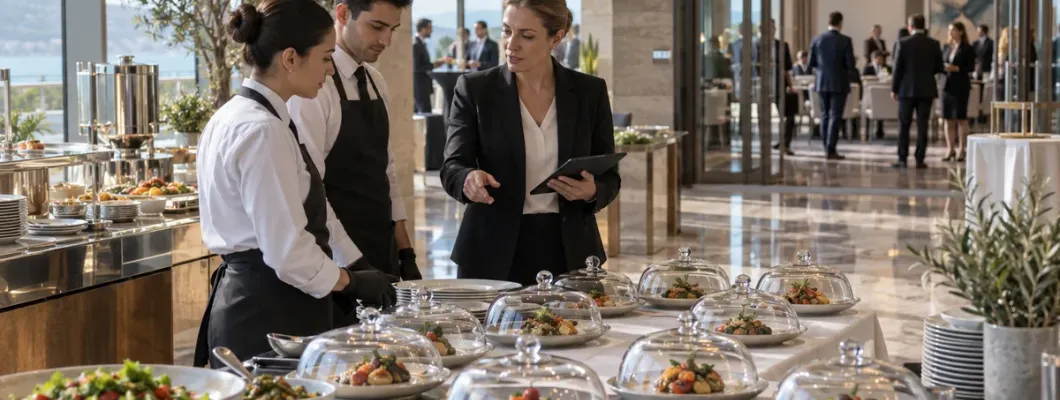
Corporate event catering in Turkey needs to fit the meeting programme as carefully as the meeting rooms. A lunch that opens late can shorten a workshop; an unclear dietary request can leave a delegate without an agreed meal. The useful starting point is a service brief connecting the agenda, the kitchen and the people delivering each plate.
This guide focuses on operational decisions for conferences, dealer meetings and corporate programmes: what to confirm, who approves changes and how to hand information to the service team. Catering should sit inside the wider MICE programme in Turkey, with one person responsible for reconciling the two schedules.
Contents
- Build the catering service brief
- Match food service to meeting timing
- Turn dietary requests into confirmed meals
- Control menus and ingredient changes
- Prepare the handover and delay response
- Questions before confirming catering
Build a service brief for corporate event catering in Turkey
Describe each service, not only the total attendance
List breakfast, coffee breaks, lunch, reception and dinner separately. For each, record the room, guest count, service format, opening time and required finish. Include speakers, crew and hosts where meals are needed. A conference with 180 registered delegates may have a different lunch count because some arrive after lunch or leave early.
Confirm quantity commitments and additional portions
Ask the venue to distinguish the contractual minimum from the working forecast and the final guaranteed quantity. Agree who can approve additional portions and how these will be recorded. These details make competing catering quotations easier to compare without assuming that a similar menu title includes the same service.
Check the route from kitchen to guest
During a venue inspection, walk the food route and the delegate route. Confirm whether service crosses a presentation area, uses a shared lift or needs an outdoor transfer. Ask what is available if the proposed service location changes. The venue should explain its preparation, storage and service arrangements; the organiser coordinates their fit with the event timetable.
Match conference catering to the meeting schedule
Test whether a break can actually work
A coffee break begins when guests reach the service area, not when the speaker stops. Allow for leaving the room, queues, conversations and returning to seats. For an illustrative 20-minute break, check whether the group can realistically use the available stations within that window. This is a planning example, not a recommended standard for every group.
Ask the catering manager to explain queue capacity, replenishment and clearing. Separate drinks from food where the room and staffing allow it. Keep accessible routes open and avoid placing a popular station directly beside the meeting-room exit.
Choose formats around the next session
A buffet offers choice but needs circulation space; a plated lunch needs a coordinated seating and service sequence. Working lunches require a plan for table clearance and microphone use. Choose the format after considering the next activity, rather than simply choosing the cheapest menu. For evening programmes, coordinate meal courses with the separate gala dinner plan.
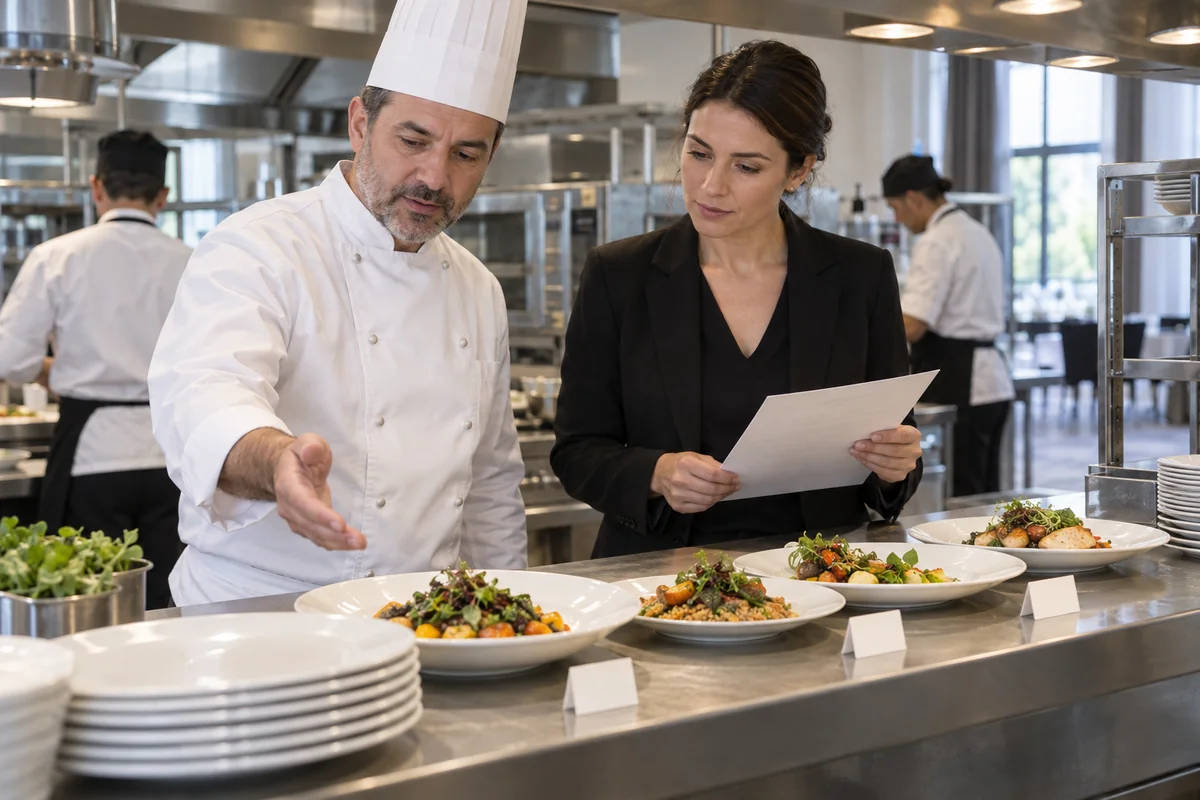
A shared service plan helps the kitchen and event team coordinate individual meals and the main dining sequence.
Turn dietary requests into confirmed individual meals
Collect distinct requirements in registration
Separate food preferences, allergies or intolerances, and religious dietary requirements. A vegetarian preference and a declared allergy require different questions and confirmations. Invite delegates to describe their requirement in their own words and give a private contact route for clarification. Avoid assuming that nationality, a guest name or a broad menu label explains what someone can eat.
Request only information needed to organise the meal, and restrict the detailed list to people handling it. Ask permission before sharing an individual request with the catering contact. A practical record links a delegate reference, the stated requirement, the service concerned and the kitchen's response.
Obtain written dish-level confirmation
Forward requests to the named catering lead and ask for a written response covering the actual proposed dishes, ingredients and preparation limitations. Include sauces, dressings, garnishes and bread. A general assurance that the hotel “handles dietary needs” does not identify the meal that will reach the delegate.
The Food Standards Agency's allergen guidance supports written information alongside a conversation. That communication principle is useful for event planning; the source describes a UK framework. Ask the Turkish venue to confirm its own applicable arrangements and avoid making unsupported “free from” promises.
Keep menus and ingredient substitutions under control
Use one approved menu version
Give the approved menu and individual-meal register a version number, date and named owner. Keep a short change log. If a supplier changes a sauce, garnish or product, the kitchen should flag the affected dishes and recheck the relevant requests before the replacement is accepted. The event team then updates labels, service notes and the delegate response where needed.
Agree deadlines for requests and final checks
Agree deadlines in writing. For example, an initial request list 14 days before arrival and a final review 72 hours before service could be a starting point for discussion. These figures are illustrative; the venue's confirmed preparation needs and the group's arrival pattern should determine the actual cutoffs.
Distribute individual meals discreetly
Agree a private identification method: a discreet table reference, a named service contact or a collection point. Brief staff to confirm the guest and meal without announcing personal information across the room. Keep individual meals distinguishable through preparation and handover using the venue's agreed procedures. If identity or dish information is unclear, pause that meal and contact the catering lead instead of guessing.
Prepare the service handover and delay response
Brief the people working the actual shift
Run a short handover with the kitchen lead, banquet captain and event manager. Check that everyone has the same documents, including relief staff joining later. The catering cue should appear in the event run of show, with a named person authorised to release each service.
- Confirmed counts, locations, service windows and menu version.
- Individual-meal references, written confirmations and distribution owner.
- Approved substitutions, remaining questions and escalation contact.
- Agreed clearing, replenishment and additional-portion process.
Decide what happens when a session overruns
Before opening, agree who tells the kitchen about an agenda change and who confirms a revised service time. The catering team decides what adjustments its food preparation and handling procedures allow. The organiser decides whether to shorten a session, move a break or revise the guest message. Do not allow separate teams to issue conflicting instructions.
Record actual attendance and unused portions afterwards. These observations can inform the next forecast and support responsible event planning, while keeping required meal availability central to the decision.
Questions before confirming corporate event catering in Turkey
Can late dietary requests be accommodated?
Ask the catering lead to assess each request against ingredients, preparation arrangements and time available. Record the answer and tell the delegate what has actually been confirmed. A late request should never silently become an assumed acceptance.
Should every meal be included in the hotel package?
Check the programme service by service. Package inclusions may differ from the planned rooms, times or formats. Compare confirmed inclusions and supplements before approval. AquaMICE's event management and PCO services provide a starting point for discussing coordination across the wider programme.
What should an initial catering enquiry include?
Send the destination, dates, attendance forecast, draft agenda, preferred formats and known dietary requests through the AquaMICE contact page. Ask for scope and supplier confirmations against that brief. Effective corporate event catering in Turkey begins with a clear chain from delegate request to kitchen confirmation, service instruction and the right meal reaching the right guest.