
Contents:
- Define the technical learning outcome
- Select a venue around practical work
- Build workable training rotations
- Connect equipment and delegate logistics
- Measure learning and control delivery
- Prepare a brief for AquaMICE
Automotive technical training events in Turkey bring service engineers, workshop managers and regional trainers together to practise a defined process. Their value depends on what participants can demonstrate afterwards: a clearer diagnostic approach, consistent service documentation or confident use of an approved training tool. A polished presentation alone cannot deliver that result.
The event should therefore be designed from the training station outwards. The manufacturer defines the technical curriculum, trainer qualifications and equipment requirements; the event team builds the venue, accommodation and movement plan around them. This guide focuses on that operational brief, helping automotive companies commission a practical learning programme with clear responsibilities.
Define the Outcome of Automotive Technical Training Events in Turkey
Choose one observable capability for each module
Replace broad objectives such as improving product knowledge with a task that an instructor can observe. For example, participants might explain a diagnostic sequence using an approved simulator or complete a sample service record accurately. Specify the starting knowledge, the exercise and the evidence of completion before selecting room layouts.
Separate technicians, workshop managers and regional trainers
These audiences need different levels of detail. Technicians may require supervised practice, managers may need workflow discussions, and regional trainers may need to rehearse delivery in their own markets. A shared opening can establish context, followed by role-specific sessions that protect the time each group needs with the right specialist.
Keep curriculum ownership with the automotive client
The client should approve technical material, terminology and any assessment criteria. An event organiser can coordinate the learning environment without becoming the technical authority. Confirm who signs off presentations, who answers specialist questions and who may change an exercise when equipment or participant needs change.
Select Automotive Training Venues Around Practical Work
Inspect the entire equipment route
A room photograph does not show whether demonstration equipment can reach it. Check delivery access, door clearances, freight lifts, floor suitability and the route from unloading to the training position. Obtain the venue's written acceptance of the exact equipment and proposed activity before treating a space as confirmed.
Distinguish classroom demonstrations from workshop activity
A conference room may suit software demonstrations and inert teaching aids, while practical vehicle work can require a specialist facility. Describe every planned activity accurately when requesting proposals. The manufacturer's qualified technical team should define the permitted working conditions and supervision; the venue and relevant specialists then confirm whether those conditions can be provided.
Compare locations against the actual delegate journey
Build the shortlist around participants' departure airports, training facilities and hotel requirements. A residential programme can reduce daily movements, but a separate workshop may be worth the additional transfer. Use a structured venue sourcing and site inspection process to compare the same operational requirements across every candidate.
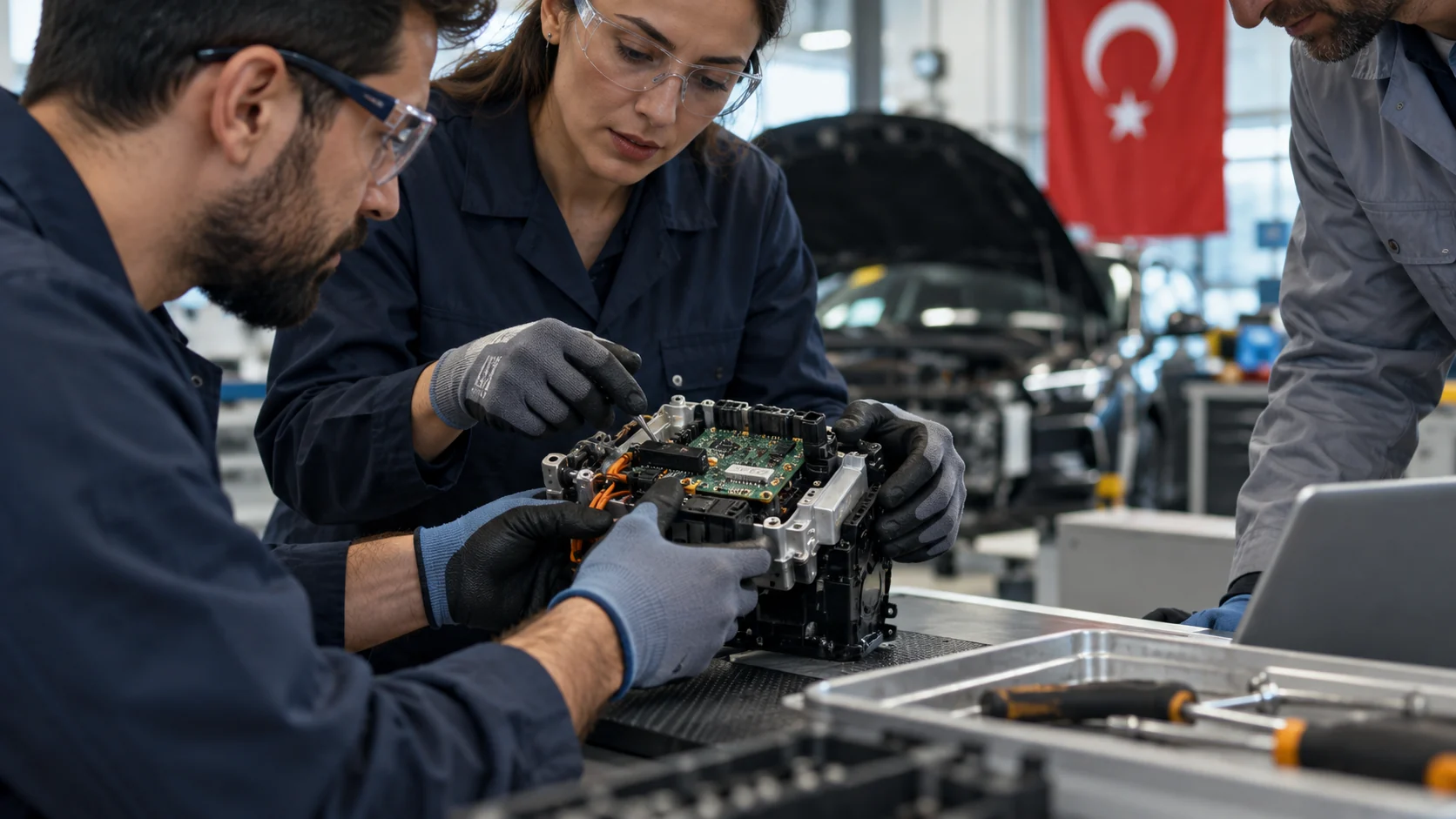
Illustrative AI-generated scene: a supervised automotive learning station.
Build Training Rotations That Give Everyone Practice
Calculate capacity from stations rather than seats
A classroom may seat sixty people while a practical station can serve only six at a time. As an illustrative planning exercise, thirty-six participants divided into six groups require six rotations to visit six stations. The real schedule must then add briefing, movement, equipment reset and breaks; classroom capacity cannot substitute for this calculation.
Reserve time for reset and instructor questions
Training sessions rarely end when the final slide disappears. Devices may need to return to a starting state, materials must be replaced, and participants often need a short individual explanation. Ask instructors to rehearse a full cycle, including these activities, before committing to the published timetable and transport departures.
Plan language support around the exercise
Live interpretation in a plenary and support at a small training station are different tasks. Share an approved glossary, device names and example instructions with language specialists in advance. During practical work, arrange the group so everyone can hear both the trainer and the interpretation without crowding the demonstration area.
Connect Equipment Logistics with Automotive Delegate Operations
Create an equipment register with a named owner
List each training device, case, cable, consumable and approved software version alongside its owner and required arrival time. Include setup duration and the point at which the trainer accepts the station as ready. Cross-border equipment movements should be reviewed with the appointed logistics specialist early, with shipment responsibilities agreed before dispatch.
Schedule trainer arrival before participant arrival
Trainers need a protected window to inspect the space, test teaching materials and rehearse the rotations. Place this time in the hotel and transfer plan rather than assuming an early arrival will happen informally. If a specialist travels with essential equipment, document an alternative teaching sequence for a delayed arrival.
Align rooming lists with learning groups
Accommodation and transport lists should use the same participant identifiers as the training schedule. This allows the operations team to adjust a late arrival without losing the person's session allocation. The principles in AquaMICE's corporate group transportation guide can support the movement plan while technical attendance remains under the training coordinator's control.
Measure Learning and Keep Delivery Under Control
Use a simple instructor observation sheet
Record whether each participant completed the intended task, needed further assistance or should repeat a module. Keep attendance separate from demonstrated ability. Where formal certification is intended, the automotive client must define its authorised process; an event attendance record should never imply a qualification that has not been assessed and awarded.
Give technical and event issues different escalation owners
A missing transfer and an unsuitable training device need different decision-makers. Name an operations lead for travel and venue issues and a technical lead for exercises, equipment and instructor decisions. Both should use the same master schedule so a paused station can trigger a controlled programme adjustment.
Follow up with approved learning resources
After the event, share the client-approved materials and the route for further technical questions. Ask managers whether participants have applied the process in their normal work, using a follow-up interval appropriate to that process. This produces more useful evidence than relying only on satisfaction scores collected at the closing dinner.
Prepare an Automotive Training Event Brief for AquaMICE
Provide the information that changes the venue decision
Start with participant roles, group size, source markets, preferred programme length and required languages. Add equipment dimensions, practical activities, trainer numbers and the time needed to prepare each station. Identify requirements that are essential and preferences that can be traded against travel time, cost or venue availability.
Request a budget with visible assumptions
Separate venue and production costs from accommodation, meals, transfers and specialist technical services. Ask proposals to show how additional rotations, extra preparation days or a second training location affect the scope. Comparing these assumptions is more useful than comparing headline totals built around different levels of support.
Agree the event scope before confirming suppliers
Discuss venue coordination, guest logistics and on-site support with AquaMICE, then confirm the agreed services in the project scope. Keep manufacturer-provided trainers, technical approvals and any specialist facility requirements explicit. A clear division of responsibilities helps both teams prepare efficiently and makes supplier quotations easier to assess.
Well-planned automotive technical training events in Turkey connect the learning objective to every operational decision. Share your training audience, equipment brief and intended outcomes with the AquaMICE team to discuss the destination and event support your programme requires.
AquaMICE coordinates corporate event management for programmes in Turkey. For the next planning step, explore choosing a DMC in Turkey, planning a corporate event in Antalya. Review our references and event gallery when preparing your brief. Contact AquaMICE with event objectives, dates, audience, destination and production requirements so the team can assess the scope and prepare a relevant proposal.