
Contents
- Define language needs for the MICE Turkey conference
- Choose the interpretation format for each session
- Connect MICE Turkey interpretation to room planning
- Prepare speakers and working materials
- Operate the MICE Turkey language service on site
- Build a complete interpretation brief
A MICE Turkey multilingual conference needs a language plan before its rooms and running order are finalised. An international meeting in Türkiye may involve presentations in one language, questions in another and parallel workshops with different audiences. Saying that interpretation is required does not explain those situations. This guide shows how to turn the programme into a usable brief for the language provider, technical supplier and local event organiser, so the agreed service supports the conversations that guests actually need to have.
Define language needs for the MICE Turkey conference
Record language directions for each session
For example, a MICE Turkey session might have an English presentation followed by questions from Turkish-speaking guests. If the speaker needs to hear those questions in English, the brief must identify that return direction as well as the audience's listening language. Confirm the proposed coverage with the provider before the event team labels the entire session bilingual; the two conversation stages create different requirements.
Specify the language people will speak and the languages participants need to hear, rather than listing languages without direction. A presentation and its question session may have different requirements. The AIIC guidance on selecting interpreters identifies language combinations and qualified professional experience among the selection considerations. Build a session table using your actual audience and ask the language provider to confirm how it will cover those requirements.
Distinguish presentations from informal interaction
Separate plenary interpretation, workshop discussions and hosted business meetings in the programme brief. A service arranged for the main conference does not automatically cover every corridor conversation or evening activity. Explain where the company expects supported communication and where guests will interact independently. That boundary gives the supplier enough detail to propose the relevant service and helps hosts answer delegate questions without promising coverage that has never been discussed.
Confirm demand using the attendee information available
Ask the event owner what it knows about guest language preferences and expected participation. Use registration information to refine the plan, while keeping provisional demand visible until the list is settled. Do not infer everyone's needs solely from nationality or office location. When attendance changes, review the affected sessions and receiver assumptions with the provider so the final arrangement reflects the actual programme rather than an early audience estimate.
Choose the interpretation format for each session
Understand the difference in meeting flow
AIIC's interpreting FAQ distinguishes simultaneous delivery from consecutive interpretation, where speaker and interpreter take turns. Discuss the suitable format with the language provider before assigning session durations. Then show the selected approach in the programme, moderator brief and supplier scope. A format chosen for a short welcome may not suit a full presentation block, so review each part against its intended discussion style and audience.
Protect time for questions and small-group discussions
A session can contain a prepared presentation, audience questions and a live discussion, each with different microphone and language needs. Explain the full sequence to the provider and moderator. If the format requires pauses, include them in the running order rather than expect the discussion to fit an unchanged slot. Clear time allocation helps speakers understand how much material they can reasonably present while still allowing the audience to contribute.
Treat remote participation as a separate planning requirement
If speakers or guests join online, describe their role and the planned route for questions. Confirm the platform arrangement, language access and technical responsibilities with the relevant providers. A service designed for people sitting in the room should not be assumed to work identically for remote guests. Test the agreed configuration using the actual participation scenario before publishing joining instructions or treating the hybrid component as ready.
Connect MICE Turkey interpretation to room planning
Agree the technical scope with the specialist provider
Share the room layout, programme and chosen interpretation format with the technical and language teams. AIIC's multilingual event guidance points organisers towards technical and distance-interpreting resources. Ask the specialists to specify the equipment and working conditions needed for your event. Their confirmed requirements should then appear in the venue and production brief, including any item that needs a separate quotation or site review.
Keep interpretation arrangements visible in the room layout
Identify the agreed working position, equipment footprint and guest service points on the current room plan. Consider their relationship to seating, stage activity and circulation without inventing a standard arrangement that suits every property. The venue and suppliers should review the actual proposed layout. If a production revision moves a screen, seating area or working position, check whether it affects the accepted interpretation arrangement before treating the revision as complete.
Plan parallel rooms against the real session timetable
Provide a timetable showing which rooms run simultaneously and where interpretation is requested. Ask the provider to propose the staffing and technical resources against that overlap. A quotation for one room cannot simply be stretched across concurrent sessions. Keep preparation, access and transition requirements visible as well. The event organiser can then coordinate room availability and supplier arrival with the service that has actually been accepted.
Prepare speakers and working materials
Set a workable handover for presentations and terminology
Agree a material handover milestone with the event owner and language provider. Create a compact pack containing the programme, approved speaker files and useful company terminology relevant to the sessions. Give each file a clear version so late updates do not create confusion. The event team can track which materials have been provided and which are still outstanding, rather than discovering during rehearsal that several speakers expected somebody else to send them.
Manage restricted materials through an agreed process
Some presentations contain information that the company does not circulate widely. Agree who receives the files, how they are shared and how updates are authorised through your organisation's normal process. Identify the responsible client contact for questions about content. The local organiser should not decide independently which restricted material can be released or assume that a conference-wide folder is appropriate for every document in the preparation pack.
Brief presenters on the agreed session arrangement
Tell speakers which format their session uses, how audience questions will be handled and what the moderator expects at transitions. Ask them to flag last-minute changes to the agreed contact before they begin. A speaker who replaces a planned discussion with an unannounced video can affect several suppliers at once. Sharing the current running order helps the language, production and host teams prepare for the same sequence of events.
Operate the MICE Turkey language service on site
Test the actual language route during rehearsal
Run a practical test covering the speaker position, audience listening arrangement and the planned question process. Include remote contributors where they form part of the accepted scope. Ask the technical and language providers to confirm the test result and record any open action. A general sound check is useful, but the organiser also needs to know whether the complete service works in the situation that the programme will create.
Make delegate instructions simple and consistent
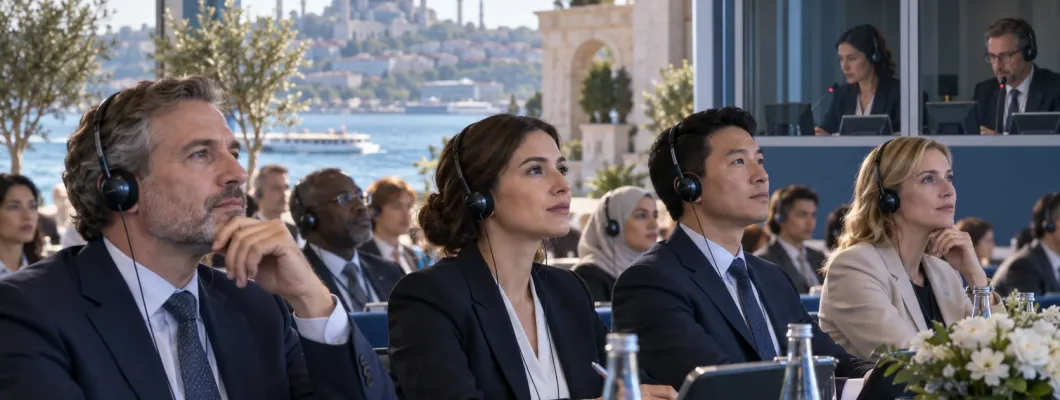
Explain how guests access the agreed language service and where to ask for help. Keep the instructions consistent on the session information, equipment service point and moderator announcements. If receivers are provided, agree their distribution and return process with the supplier. Hosts should understand the procedure well enough to guide participants promptly, while referring technical faults to the responsible specialist instead of changing settings without direction.
Keep changes under one operating contact
Name the person who coordinates programme changes with the language and technical teams. A moved session, new speaker language or extended discussion may affect the accepted arrangement. Record the request and obtain the provider's confirmation before communicating revised coverage to guests. One shared contact helps prevent a moderator, host and visiting manager from giving separate instructions that leave suppliers working against different versions of the same session.
Build a complete interpretation brief
Separate language service from other event responsibilities
Identify who appoints the interpreters, supplies equipment, manages speaker materials and coordinates rooms. Where AquaMICE is involved, discuss those tasks within the agreed event management and PCO scope. Specialist availability, languages and technical arrangements require confirmation for the actual project. A clear responsibility table allows local coordination to support the service without implying that every language or configuration is automatically available for every programme.
Connect language planning with the delegate journey
Give the local organiser enough programme context to align room access, accommodation and transport with the confirmed session schedule. Use the MICE Turkey congress planning guide for the wider meeting structure. Language arrangements should sit within that structure, with supplier access and guest instructions considered alongside the timetable. This avoids solving interpretation in isolation while leaving practical arrival or rehearsal dependencies unresolved.
Close the brief with a confirmed service checklist
Before the programme begins, compare the final brief with the supplier's accepted scope and the latest session list. Check which changes were confirmed and remove obsolete versions from the working pack. Keep open questions visible to the responsible person until they are resolved. After delivery, review the service with the event owner and providers using the actual programme, so useful observations can inform the next multilingual meeting.
- Languages spoken and heard for each session, including questions.
- Confirmed interpretation format, room coverage and participation scenario.
- Specialist staffing and equipment scope accepted for the programme.
- Speaker material handover, file versions and content ownership.
- Rehearsal checks, delegate instructions and one change coordination contact.
A clear MICE Turkey interpretation brief connects audience needs, speaker preparation and local operations before the conference opens. Bring your language directions, session outline, delegate range and intended format to AquaMICE to discuss coordination for your meeting in Türkiye. Those details give the specialist providers and organising team a practical basis for confirming the service your programme requires.