
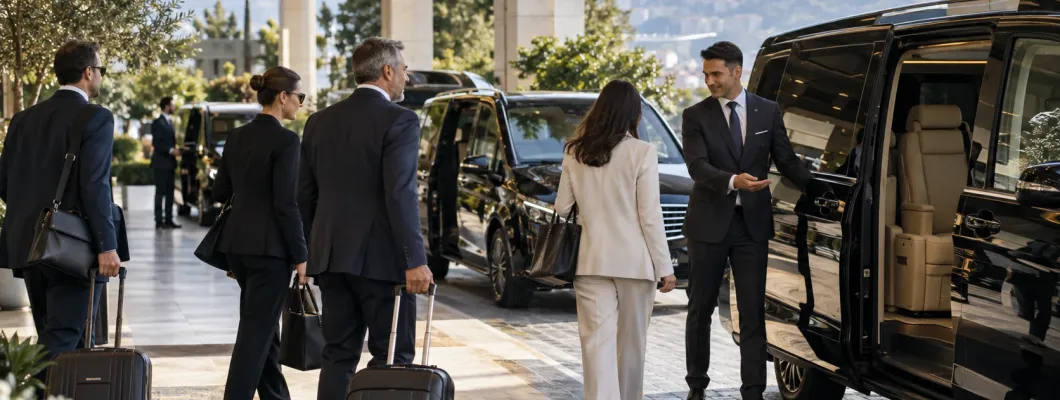
Contents:
- Transport as an event system
- Manifest and fleet planning
- Airport and hotel operations
- Shuttles and off-site movements
- VIP, safety and contingency
- AquaMICE transport management
Corporate group transportation in Turkey is not a collection of individual vehicle bookings. For a conference, incentive programme or dealer meeting, every movement depends on live flight data, hotel allocation, session times, guest categories and local traffic. A reliable transport plan turns those dependencies into one controlled operation.
AquaMICE combines transport procurement with manifest control, airport teams, dispatch and on-site decision-making. This wider approach protects the agenda and gives international planners a clear view of where guests and vehicles should be at every stage.
Why Corporate Group Transportation in Turkey Is Mission-Critical
Transport controls the event clock
A ten-minute delay across several coaches can affect registration, catering and stage timing. Transport milestones therefore belong in the master event schedule and must be planned backwards from the moment guests need to be seated.
Different destinations create different constraints
Istanbul requires realistic traffic buffers and careful kerbside planning. Antalya combines airport peaks with resort corridors. Bodrum may involve narrower access and seasonal demand. Local route knowledge is as important as the vehicle specification.
Guests judge organisation during every transfer
A clean vehicle is only the baseline. Clear meeting points, accurate signage, informed hosts, suitable luggage space and timely updates shape confidence before a delegate reaches the venue.
Build the Movement Plan from Accurate Data
Create one protected passenger manifest
The manifest should include name, flight, terminal, hotel, luggage, accessibility, language and service category. Data ownership and update deadlines must be defined so that dispatch never works from competing spreadsheets.
Group passengers intelligently
Grouping by flight number alone may be inefficient when delays or different hotels are involved. Arrival windows, baggage collection time and programme priorities should determine whether guests share a coach, take a van or receive an individual vehicle.
Model the fleet before confirming it
Capacity must consider luggage, not only seats. The model should show peak demand, dead mileage, driver hours, parking limits and backup requirements. AquaMICE’s group transfer service builds the fleet around the operating scenario.
Airport Arrivals and Departures
Design a visible but controlled welcome
Hosts need approved meeting points, accurate guest lists and a direct link to dispatch. Signage should be recognisable without exposing personal information. Guests should receive concise arrival instructions before travel.
Connect flight monitoring to dispatch
Early arrivals, delays and missed connections continuously change vehicle demand. When corporate air services and transport share data, the team can adjust loading plans before guests reach the meeting point.
Plan departures differently from arrivals
Departure waves require hotel check-out, luggage collection and terminal-specific travel time. Pickup lists should be confirmed visibly at the hotel, while contingency vehicles cover late changes without delaying the full group.
Hotel Shuttles and Off-Site Event Movements
Protect session start times
Shuttles should have boarding windows, route leaders and a clear final sweep. Vehicles are assigned by hotel and destination, with dispatch tracking departures rather than relying on assumptions.
Coordinate transport with venue access
Historic venues, marinas and restaurants may have restricted coach access. Drop-off, parking, driver standby and the final walking route must be inspected. The event management team links venue operations to transport timing.
Make excursions operationally realistic
Activity duration, footwear, weather, meal timing and traffic affect the transport plan. AquaMICE designs corporate excursions with feasible routes and appropriate vehicles rather than treating transport as an afterthought.
Service Levels, Safety and Contingency
Define categories without creating confusion
Coaches may serve the main delegation while executive vans support speakers or leadership. The rules must be clear and discreet. VIP services can add fast track, meet-and-greet and private transfers where the brief requires them.
Check suppliers and operating standards
Vehicle suitability, insurance, driver documentation, maintenance and communication capability should be verified. Briefings cover routes, guest service, emergency procedures and the prohibition of unapproved substitutions.
Prepare for disruption
Backup vehicles, alternative routes, spare hosts and escalation contacts protect the programme. Weather, road closures and flight disruption are monitored, with decisions communicated through one authorised channel.
Communication and Live Dispatch
Give each stakeholder the right information
Guests need simple instructions; drivers need routes and timings; hosts need passenger details; client leads need status summaries. Sending everyone the same operational document creates confusion and unnecessary data exposure.
Use checkpoints rather than assumptions
Dispatch confirms vehicle ready, host ready, loading started, departed and arrived. This sequence creates a live operational picture and makes emerging delays visible early.
Record exceptions for improvement
No-shows, luggage issues, late vehicles and route changes should be logged. The final transport report helps reconcile costs and improve planning for the next programme.
Accessibility and luggage need explicit capacity
Wheelchairs, mobility support, sports equipment, exhibition cases and oversized luggage cannot be solved by nominal seat counts. They should be identified before fleet confirmation, with suitable vehicles, loading time and private communication arranged for the affected guests.
The final audit also confirms that every route has an operational owner, a tested contact number and a written fallback. This small discipline prevents a minor delay from becoming an event-wide information gap.
How AquaMICE Manages Delegate Movements
Transport connected to the wider programme
Vehicle planning uses the same hotel, flight and agenda data as accommodation management and event operations. This reduces manual handovers.
Local teams at critical points
Airport hosts, hotel coordinators and dispatch supervisors follow a common manifest and escalation plan. The client receives meaningful status updates without managing every driver.
A proposal built from movement facts
Share dates, airports, hotels, venues, passenger numbers, luggage profile and service categories. AquaMICE will design corporate group transportation in Turkey around the real delegate journey; start at the contact page.
AquaMICE coordinates corporate group transfers for programmes in Turkey. For the next planning step, explore Antalya arrival arrangements. Contact AquaMICE with arrival and departure details, passenger lists, luggage and hotel stops so the team can assess the scope and prepare a relevant proposal.
Before issuing the final transport plan, confirm the latest flight details, passenger count, luggage and mobility needs with the group owner. Assign a coordinator for changes and specify when revised information must reach dispatch. Check that the arrival contact, hotel destination and return-transfer arrangements are included in the same confirmed record.