
Contents:
- Start with customer learning needs
- Design useful conference tracks
- Prepare the demonstration environment
- Build productive product clinics
- Connect travel with the customer programme
- Measure outcomes and brief AquaMICE
Software user conferences in Turkey give technology companies a setting in which customers can learn from product specialists and from one another. A useful conference helps existing users solve practical problems, understand a workflow and build relationships with the teams supporting their software. Its programme should begin with those needs, rather than with a long sequence of company announcements.
This format serves a different purpose from a product reveal. The audience already has experience, opinions and unanswered questions. By combining structured workshops, customer case discussions and scheduled product clinics, the organiser can turn a destination meeting into a focused customer education programme with tangible follow-up actions.
Set Clear Goals for Software User Conferences in Turkey
Identify the tasks customers want to complete
Ask customer success and support teams to identify recurring workflows that cause confusion. Group these into teachable tasks, such as setting up a reporting view or preparing an internal rollout plan. Each proposed session should have a named audience, a starting knowledge level and a useful outcome that can be achieved within its allotted time.
Separate administrators, everyday users and executives
An administrator looking for configuration guidance has different needs from a business sponsor evaluating adoption. Use a short shared opening, then offer tracks that respect these differences. When every session attempts to serve every role, the material often becomes too general for specialists and too technical for decision-makers.
Define who owns the product answers
The technology company should approve technical content, demonstration accounts and statements about future features. Event staff can manage timing and guest services, while product experts handle substantive questions. Give moderators a clear route for questions that cannot be answered on the day, including who will follow up and through which approved channel.
Design Software Conference Tracks Around Useful Work
Write session descriptions as learning promises
Explain what attendees will practise and what preparation they need. A workshop description should specify whether a laptop, test account or prior module is required. This helps customers choose the right session and lets the operations team distinguish an ordinary presentation room from a space that needs tables, power and hands-on support.
Use customer stories with an honest problem structure
A useful customer presentation explains the starting problem, the implementation choices and the lessons learned. Invite speakers to discuss constraints as well as successes, using only information they are authorised to share. A moderated conversation can draw out practical detail without turning the session into an extended testimonial or an unsupported performance claim.
Protect time between parallel sessions
Allow participants to move rooms, finish a question and prepare their devices before the next workshop begins. If a track depends on completing an earlier module, make that sequence visible during booking. Capacity should be tied to the support ratio and room setup, not simply to the maximum number of seats a venue can fit.
Prepare Reliable Demonstrations for a Technology User Event
Translate the demo into a technical brief
List the number of active devices, required services, wired connections and support arrangements for each room. Ask the venue and appointed technical provider to test the intended setup with representative activity. A successful video call during a site visit does not demonstrate that a full room of simultaneous hands-on sessions will work equally well.
Use approved demonstration accounts and sample data
The client should prepare a controlled learning environment with suitable sample records and access levels. Avoid designing exercises that depend on customers displaying live operational data to the room. Send setup instructions early and provide a readiness check so forgotten credentials do not consume the first part of an otherwise useful workshop.
Rehearse an alternative teaching route
For each important demonstration, prepare approved screenshots, a recorded walkthrough or an instructor-led exercise that still teaches the core concept. Define who decides to switch formats and how participants will receive practice materials afterwards. This is part of content preparation as well as the event production plan.
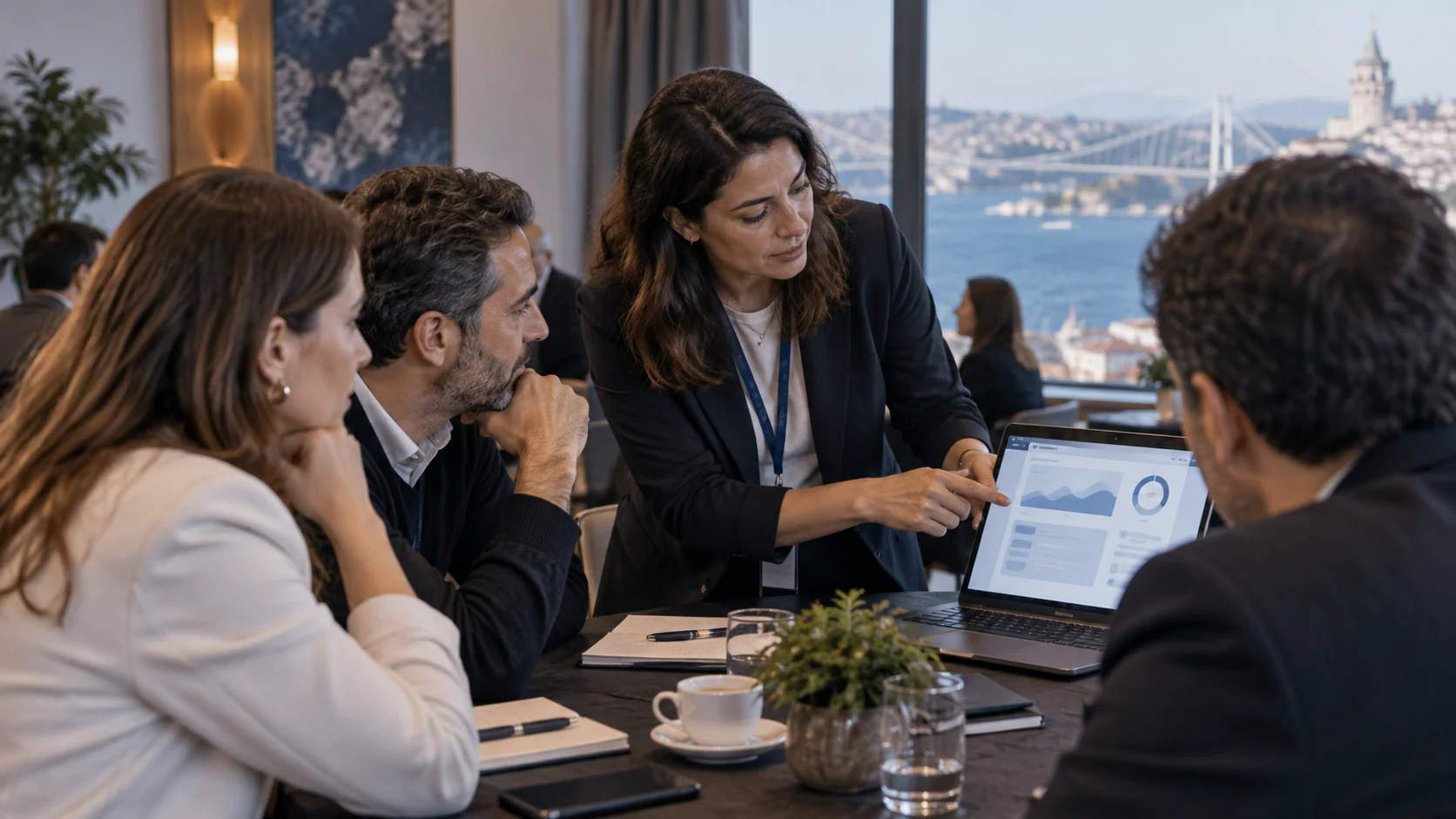
Illustrative AI-generated scene: a small-group software product clinic.
Make Product Clinics and Customer Feedback Sessions Productive
Collect a short question before each appointment
Ask customers for the topic, relevant product area and desired outcome when booking a clinic. This allows the client to assign an appropriate specialist and avoid repeatedly transferring the guest between teams. Tell attendees what can reasonably be covered in the appointment and where complex support cases should continue after the meeting.
Provide different spaces for public and private conversations
An open demonstration desk works for general feature questions, while sensitive account discussions need a quieter, bookable setting. Match seating and acoustic conditions to the conversation rather than using every available corner as an identical meeting station. Keep the public conference agenda separate from individual customer appointment details.
Capture feedback without turning every request into a promise
Use a common template for the customer problem, current workaround and business impact. Product teams can then compare themes after the event instead of receiving a collection of disconnected comments. Explain the review process clearly; acknowledging a request should not be presented as confirmation that a feature will be delivered.
Connect the Customer Programme with Travel and Hospitality
Choose the destination through the attendance brief
Compare the real travel options from customers' departure markets alongside venue suitability and accommodation needs. A compact residential format may support sustained learning, while an urban programme may fit a shorter business trip. Ask shortlisted venues to demonstrate the classroom, clinic and networking layouts your programme actually requires.
Link registration to session capacity
Registration should capture role, experience level and workshop choices only where these fields serve a clear planning purpose. Maintain waiting lists for limited-capacity sessions and tell participants how changes will be handled. AquaMICE's conference delegate registration guide explains the wider connection between guest information, attendance and on-site check-in.
Give networking a useful structure
Offer optional tables or short moderated discussions around customer roles and workflows. People arriving alone can then join a relevant conversation without needing an existing network. Keep hospitality proportionate to the learning agenda and allow enough personal time that participants can return to technical sessions ready to concentrate.
Measure Software User Conference Outcomes and Brief AquaMICE
Choose measures that match the learning objective
Workshop completion, confidence with a defined task and the number of resolved clinic questions can be useful immediate indicators. The client may also assess later product use where it has appropriate data and a defined method. Report these as different observations; event attendance alone does not demonstrate that the conference caused a change in retention or revenue.
Build a practical follow-up package
Send approved presentations, exercise instructions and answers to recurring questions through the client's preferred channel. Assign owners and response targets for unresolved clinic matters. Customer teams should know which follow-ups are educational, which are support cases and which belong in the product feedback process, so delegates receive a coherent response.
Request an event proposal with clear responsibilities
Share the audience profile, track structure, device requirements, clinic capacity and accommodation assumptions with AquaMICE. Discuss the local venue, guest logistics and production coordination required, then confirm the agreed scope. Keep software access, specialist staffing and product commitments under the technology company's ownership so the proposal accurately reflects who supplies each part.
The strongest software user conferences in Turkey make learning straightforward and customer conversations worthwhile. Bring your audience brief, workshop priorities and preferred format to the AquaMICE team to discuss how the destination and event operations can support that purpose.
AquaMICE coordinates congress and PCO services for programmes in Turkey. For the next planning step, explore MICE and congress planning in Turkey, delegate registration and check-in. Review our references and event gallery when preparing your brief. Contact AquaMICE with event dates, delegate numbers, session format and accommodation needs so the team can assess the scope and prepare a relevant proposal.